
2026-10-28 · Dave Harlan
What Homeowners Notice About Asphalt Shingle Wear After Idaho Winters
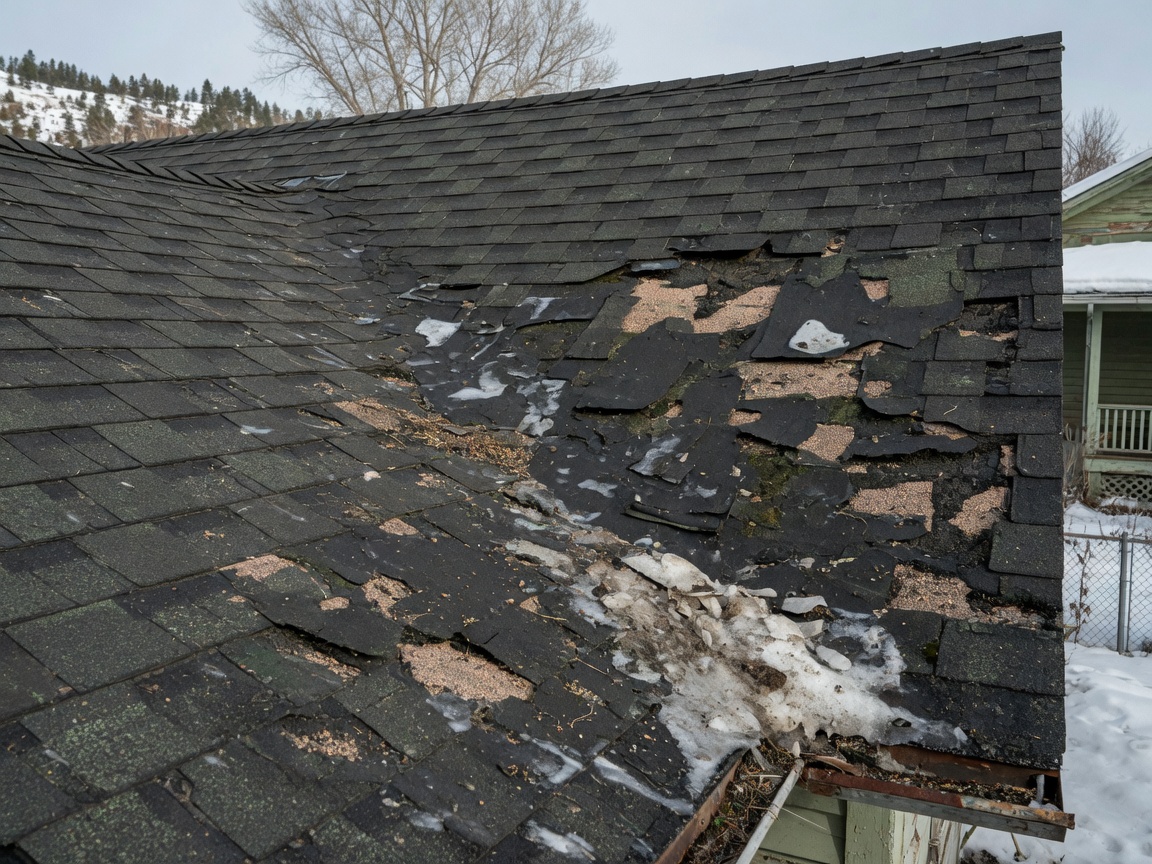
Homeowners in Kellogg commonly notice heavy granule loss and edge curling on asphalt shingles after two or three Idaho winters, with visible bald patches appearing first on south-facing slopes near Silver Mountain Resort.
Granule Loss Patterns After Freeze-Thaw Cycles
Asphalt shingles in Shoshone County lose protective granules when repeated freeze-thaw cycles loosen the surface coating. In Kellogg the pattern shows most clearly on roofs exposed to morning sun after overnight lows drop below freezing. You will see dark streaks where granules wash into gutters during spring melt, especially on homes near the Bunker Hill Mine site where wind carries extra moisture. This loss shortens shingle life by exposing the mat to UV once the top layer thins. Check attic insulation for dark spots that match missing granules above. Track the rate over successive winters rather than assuming uniform wear across the whole roof.
Curling Edges and Cracking from Snow Loads
Heavy snow that piles up near Kellogg City Park adds downward pressure that curls shingle edges upward once the load melts. The freeze-thaw action then drives small cracks along the raised tabs, allowing water to reach the underlayment. Homes in Wallace and Osburn show the same edge lift because they share the same cold snowy winters and mild summers. Walk the roof line in spring and look for tabs that no longer lie flat; count how many courses are affected before deciding on spot fixes. These cracks widen faster on older homes with original decking that has slight movement from seasonal temperature swings.
Hidden Underlayment Damage Near Valleys
Water that flows under lifted shingles collects in valleys and around penetrations, softening underlayment even when the top surface still looks intact. In Kellogg this shows up as dark streaks on ceilings after the first big spring rain following a heavy snow winter. Check the area around chimneys and skylights first because meltwater concentrates there. If you see staining, schedule a roof inspection before the next winter arrives. Early detection prevents deck rot that turns a simple shingle swap into a larger roof replacement job.
When to Schedule Professional Assessment
Once granule loss reaches one-quarter of a tab or cracks appear on more than two courses, plan an inspection before the next snow season. Local roofs near Osburn often reach this point after eight to twelve winters because of the consistent freeze-thaw pattern. A shingle roofing specialist can measure remaining coverage and advise whether targeted repairs will carry the roof another season. Compare photos taken each spring to track progression rather than guessing from ground level. This approach keeps decisions grounded in the actual wear visible after each Idaho winter.
Practical Steps Homeowners Can Take Now
Photograph south and north slopes from the ground every April and note new bald spots or lifted tabs. Clear pine needles that trap moisture along the eaves, especially on properties near Coeur d'Alene National Forest where similar conditions appear. Keep gutters free so meltwater does not back up under edges. If you find active leaks after a warm spell, review the guidance in repairing small leaks around skylights after heavy rain in Kellogg before attempting temporary fixes. These steps give clear data for any later conversation with a Kellogg-based crew.