
2026-10-28 · Dave Harlan
How Pine Needles Affect Shingles On Homes Near Coeur D Alene National Forest
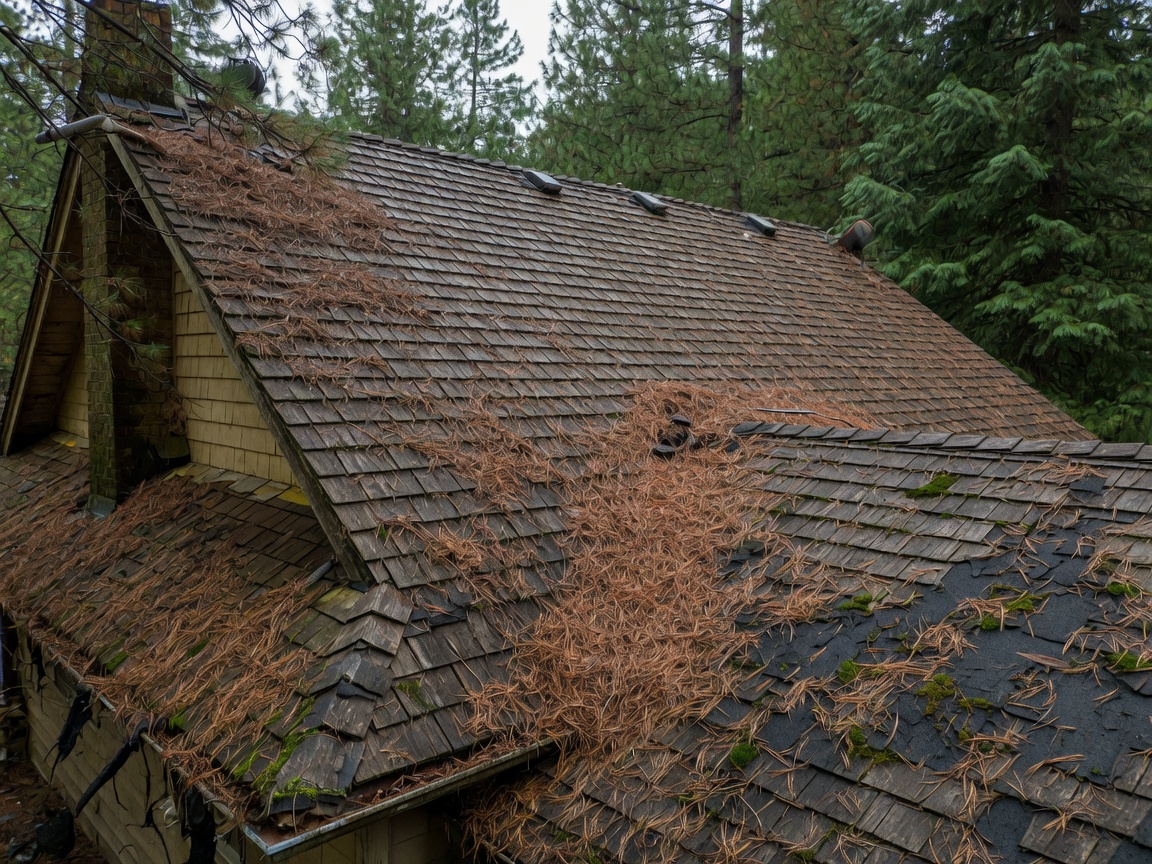
Pine needles from the dense stands around Coeur D Alene National Forest trap moisture directly against asphalt shingles and can cut expected service life by 5–8 years on homes in Kellogg and nearby Wallace or Osburn.
How Needles Reach and Stay on Shingles
Homes on the slopes below the forest edge collect heavy loads of needles each fall. Wind carries them onto low-pitch roofs common in Shoshone County mining-era houses. Once settled in the valleys between shingle tabs, the needles interlock and resist wind removal. In Kellogg the same trees that shade properties near Silver Mountain Resort drop needles year-round, so buildup starts again within weeks of any cleaning. This constant supply keeps the roof surface damp even on mild summer days.
Moisture Retention and Shingle Breakdown
Needles create a sponge layer that holds water against the shingle surface for days after rain or snowmelt. The trapped moisture softens the asphalt binder and loosens the ceramic granules that protect the mat. Over one winter in Kellogg this process repeats with each freeze-thaw cycle, exposing more of the fiberglass or organic felt underneath. Homeowners often notice dark streaks first, then small bald spots where granules have washed away. The same pattern appears on roofs in Osburn where forest cover is equally dense.
Interaction with Cold Snowy Winters
Kellogg winters bring repeated snow loads that press needles deeper into the shingle seams. When temperatures drop below freezing the trapped water expands, lifting edges and allowing further water entry. By spring the combination of needle acid and ice damage shows up as cracked tabs along the lower courses. These conditions differ from open areas farther from the forest boundary, where wind clears debris more effectively. Local roofs near Bunker Hill Mine site face the same pattern because the surrounding slopes funnel both snow and needles onto the structures.
Practical Steps for Homeowners
Schedule a roof inspection each October before the first heavy snow to remove needle mats before they compress. Use a soft-bristle roof rake from the ground rather than pressure washing, which can drive debris under tabs. Homeowners in Pinehurst and Smelterville report better results when they combine seasonal raking with annual roof maintenance visits that include targeted cleaning around valleys and near chimneys. Track granule loss by comparing photos taken each spring; if bald areas exceed a few square feet, plan for shingle roofing work before leaks develop.
Long-Term Effects on Local Housing Stock
Mining-era homes in Shoshone County often have 25- to 30-year-old shingle layers already stressed by decades of needle exposure. Continued buildup accelerates the timeline to replacement, especially on north-facing slopes that stay shaded and damp longer. Properties near Kellogg City Park and along the routes to Wallace show the same accelerated wear because the forest edge lies within a few hundred yards. Addressing needle accumulation early keeps the existing roof functional through more winter cycles and reduces the chance of interior water damage during spring thaw.